How To Hold Yarn When Crocheting
Beginner-friendly templates, step-by-step guides,
and weekly project ideas in your inbox.
Learning to crochet feels magical, but sometimes, the yarn just won’t cooperate.
I remember struggling with tension when I first started, leading to uneven stitches and frustration.
This guide will share the practical techniques I’ve learned over years of crocheting to help you master your yarn hold and create beautiful, consistent fabric.
Quick Overview
This guide will help you understand the core principles of holding yarn for crochet. You will learn how to manage yarn flow and maintain consistent tension.
Mastering your yarn hold is fundamental for comfortable crocheting and achieving even stitches.
- Time needed: 15-30 minutes (to read and practice initial holds)
- Difficulty: Beginner
- What you’ll need: A ball of yarn and a crochet hook
Step-by-Step Instructions
Step 1: Understand the Goal of Your Yarn Hand
Your non-dominant hand, often called your yarn hand, has a crucial job. It controls the flow of yarn to your hook.
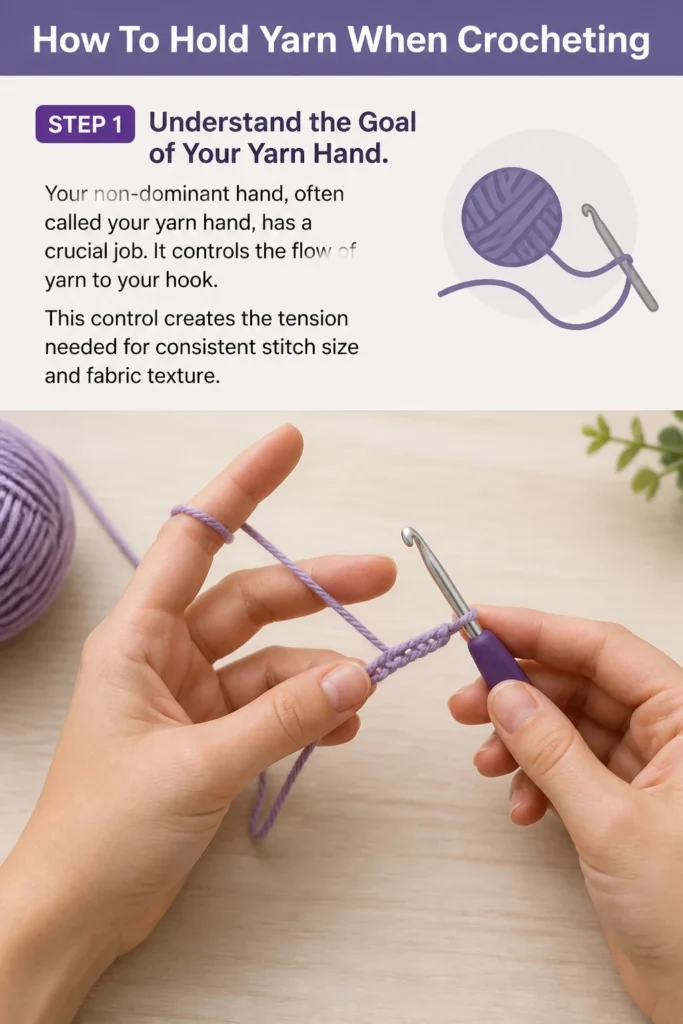
This control creates the tension needed for consistent stitch size and fabric texture.
Step 2: Hold Your Crochet Hook
First, ensure your dominant hand holds the crochet hook comfortably. Most people use either a “knife grip” or a “pencil grip.”
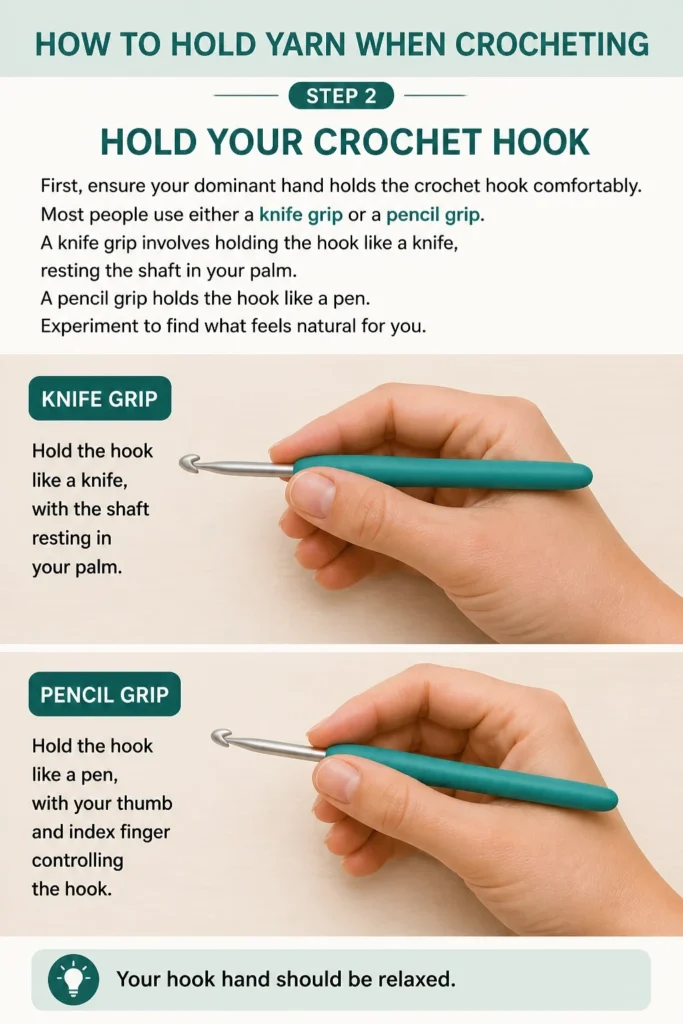
A knife grip involves holding the hook like a knife, resting the shaft in your palm. A pencil grip holds the hook like a pen.
Experiment to find what feels natural for you. Your hook hand should be relaxed.
Step 3: Position the Yarn from the Ball
Take the working end of your yarn, which is the strand coming from your yarn ball. Make sure it’s untangled and flows freely.
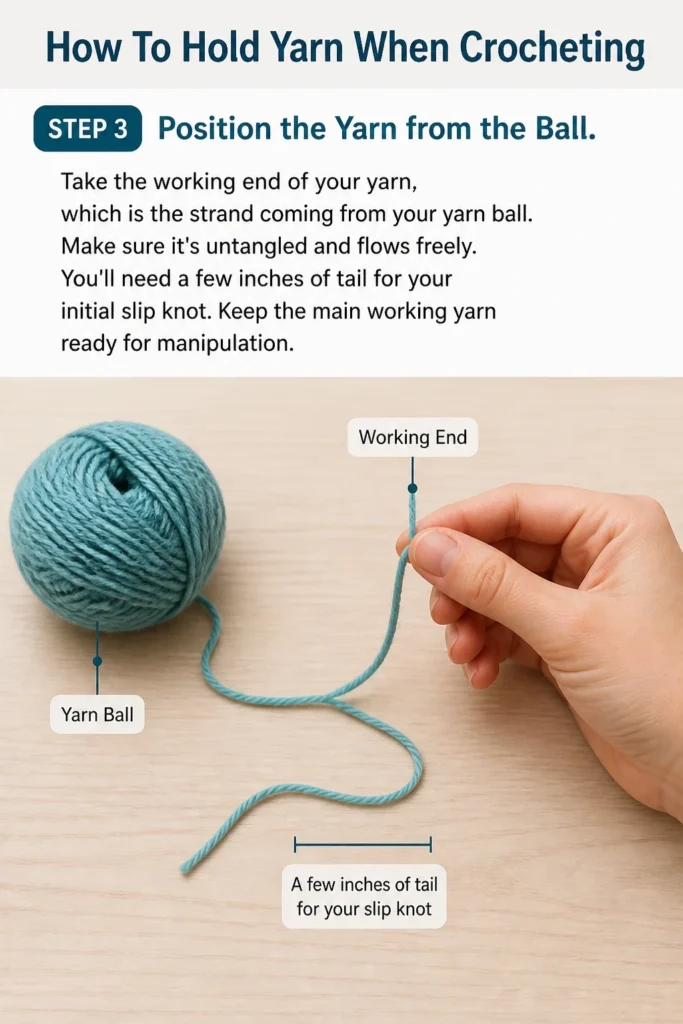
You’ll need a few inches of tail for your initial slip knot. Keep the main working yarn ready for manipulation.
Step 4: Anchor the Yarn Around Your Pinky Finger
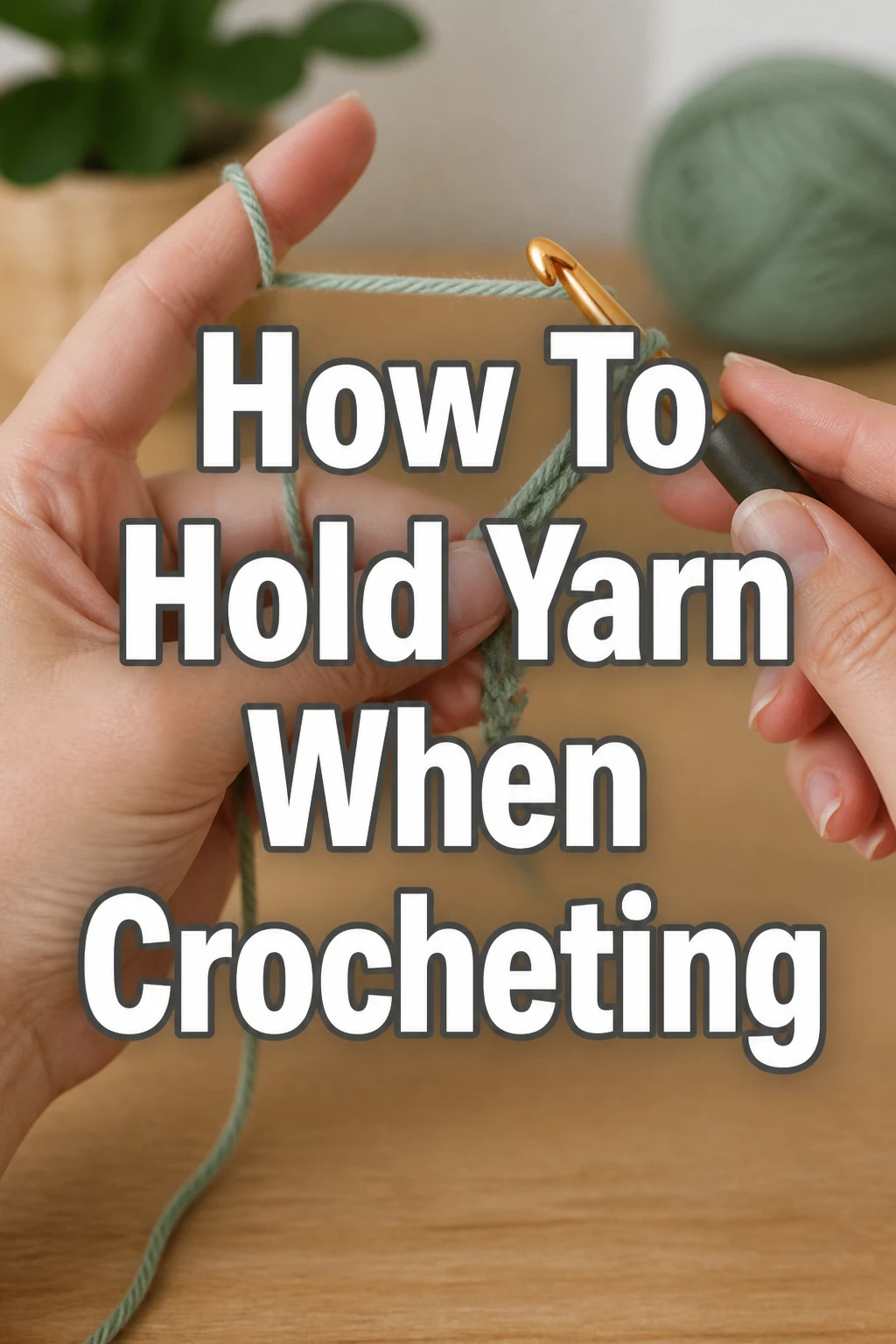
This is a common and effective starting point for tension. Wrap the working yarn once around your pinky finger on your non-dominant hand.
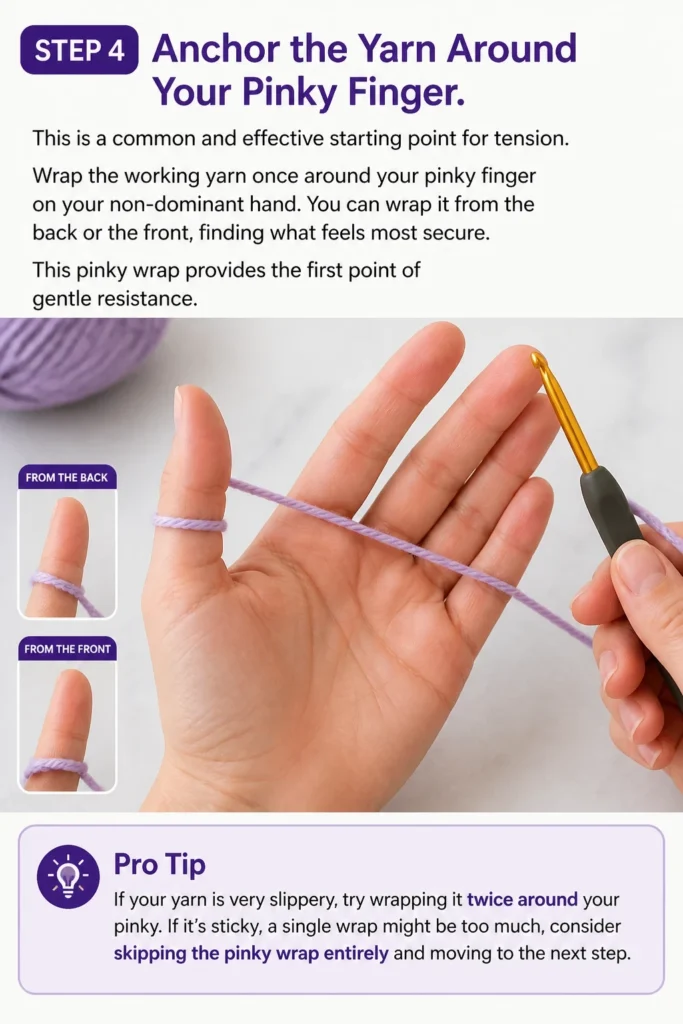
You can wrap it from the back or the front, finding what feels most secure. This pinky wrap provides the first point of gentle resistance.
Pro Tip: If your yarn is very slippery, try wrapping it twice around your pinky. If it’s sticky, a single wrap might be too much; consider skipping the pinky wrap entirely and moving to the next step.
Step 5: Guide the Yarn Over Your Index Finger
After wrapping your pinky, bring the yarn up and over your index finger. This index finger will be your primary tension control point.
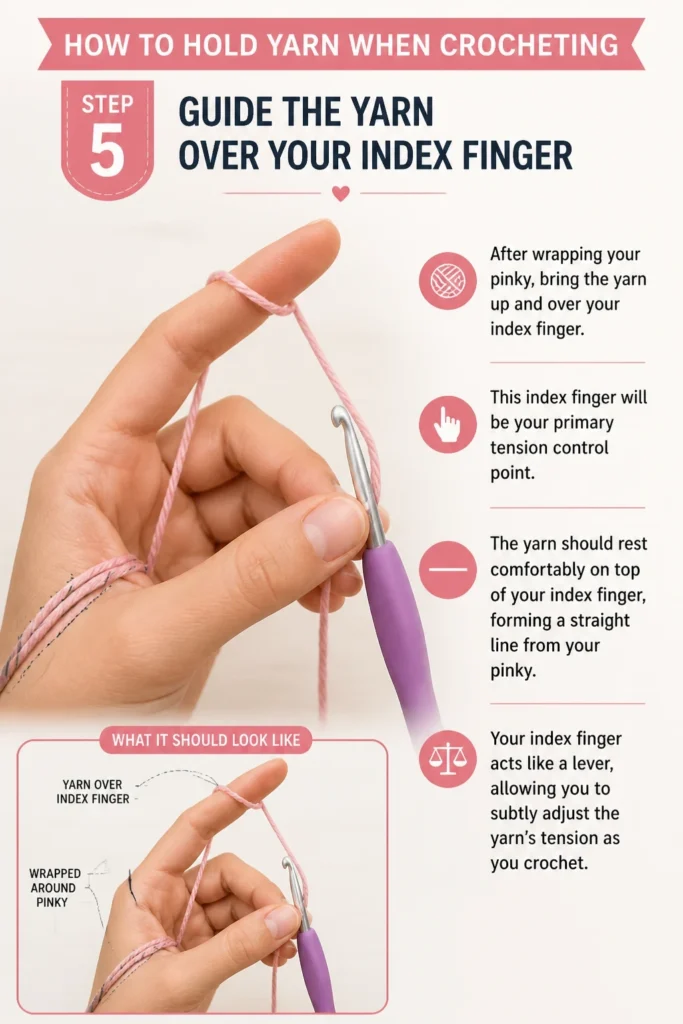
The yarn should rest comfortably on top of your index finger, forming a straight line from your pinky.
Your index finger acts like a lever, allowing you to subtly adjust the yarn’s tension as you crochet.
Step 6: Use Your Middle and Ring Fingers for Support
Your middle finger and ring finger can help secure the yarn and support your pinky and index finger.
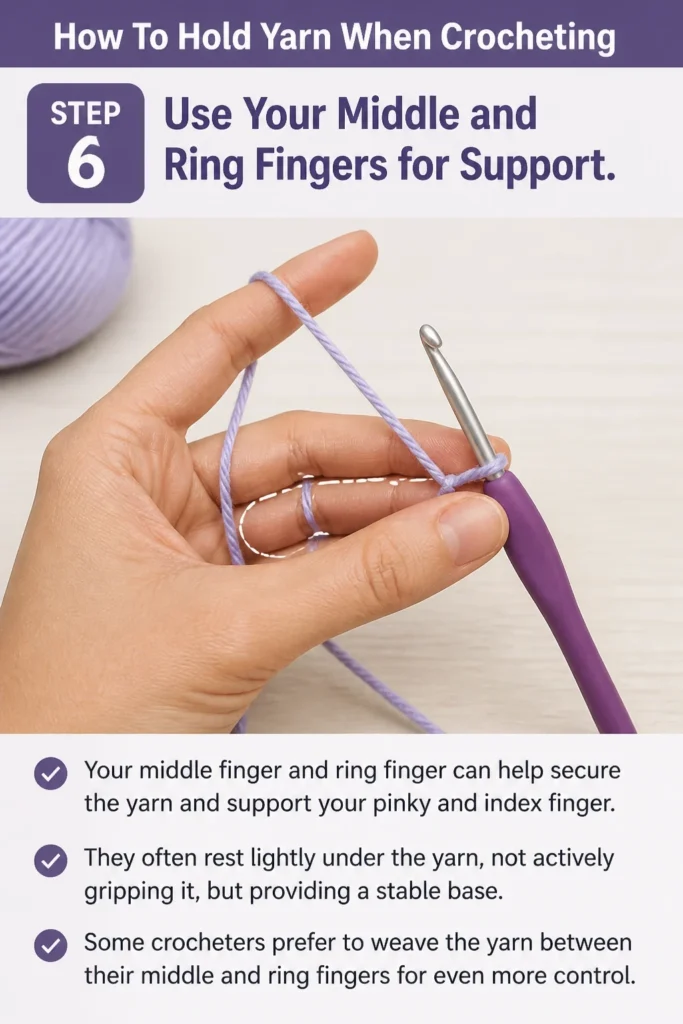
They often rest lightly under the yarn, not actively gripping it, but providing a stable base.
Some crocheters prefer to weave the yarn between their middle and ring fingers for even more control.
Step 7: Form Your Slip Knot and First Chain
With your yarn held correctly, you can now form your slip knot on your hook. This is where your tension control begins.
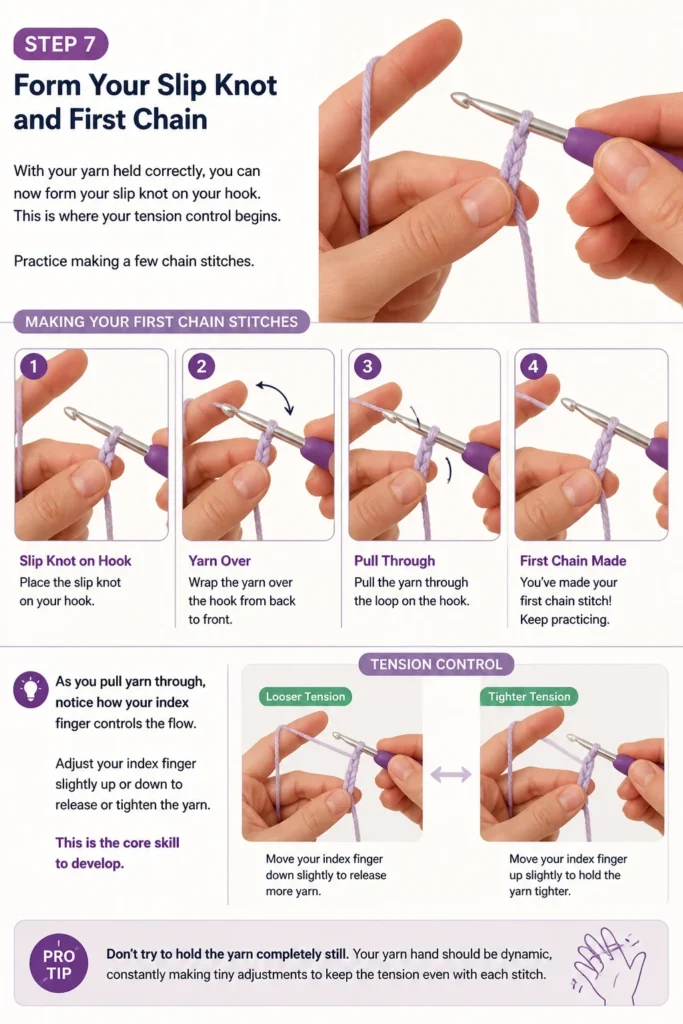
Practice making a few chain stitches. As you pull yarn through, notice how your index finger controls the flow.
Adjust your index finger slightly up or down to release or tighten the yarn. This is the core skill to develop.
Pro Tip: Don’t try to hold the yarn completely still. Your yarn hand should be dynamic, constantly making tiny adjustments to keep the tension even with each stitch.
Step 8: Practice Consistent Tension
The key to beautiful crochet is consistent tension. This means each stitch receives the same amount of yarn with the same tautness.
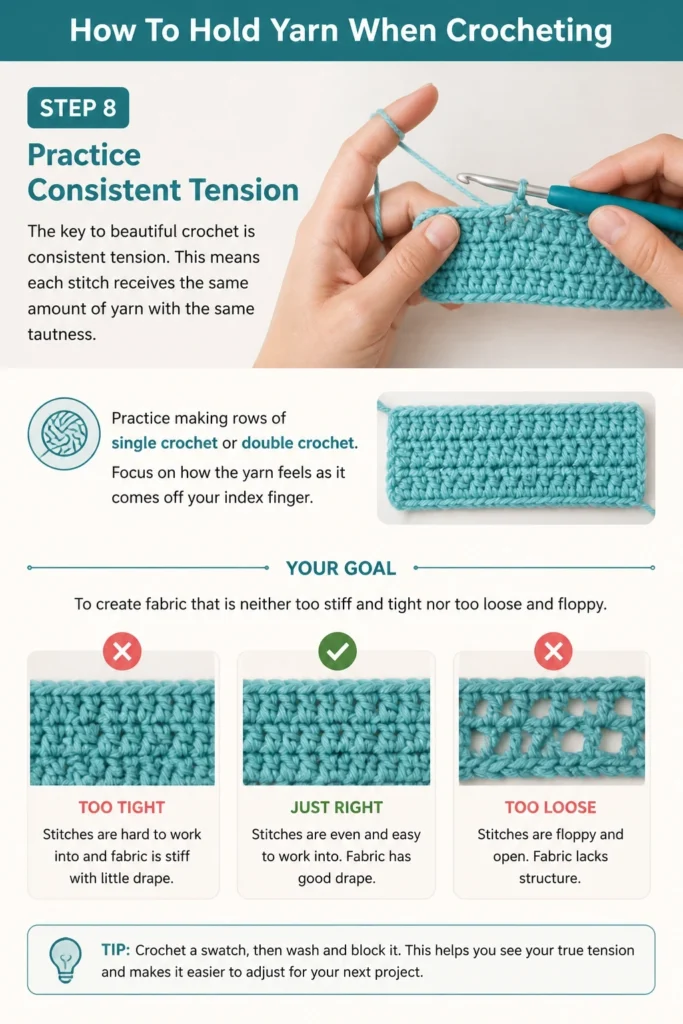
Practice making rows of single crochet or double crochet. Focus on how the yarn feels as it comes off your index finger.
Your goal is to create fabric that is neither too stiff and tight nor too loose and floppy.
Step 9: Adjust Your Grip for Comfort and Yarn Type
There is no single “perfect” way to hold yarn. Your comfort is paramount. If your hand aches, adjust your grip.
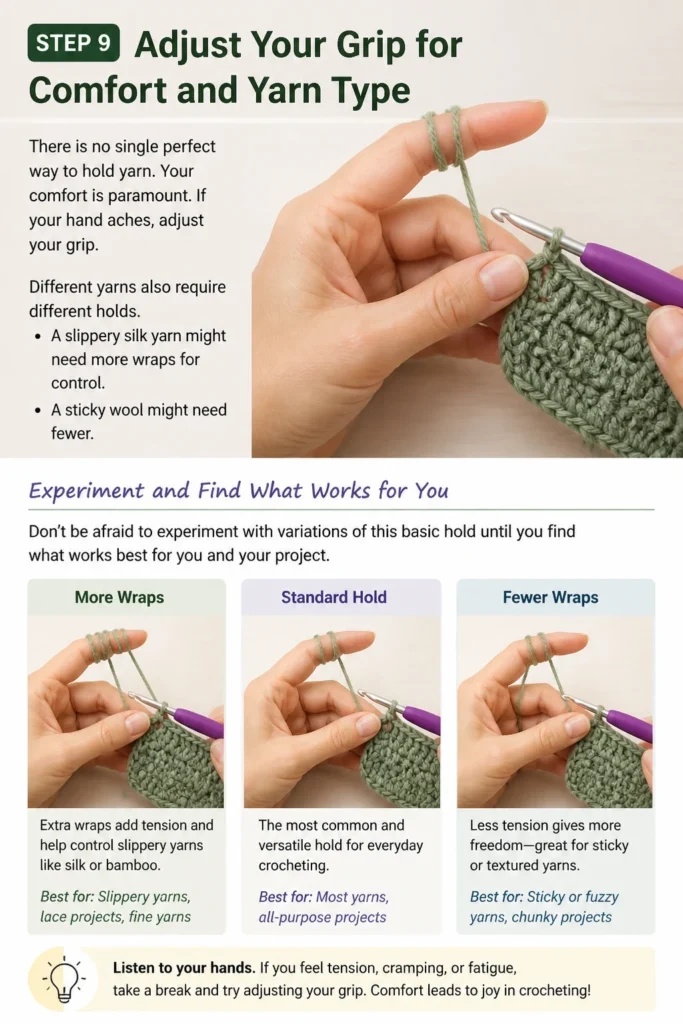
Different yarns also require different holds. A slippery silk yarn might need more wraps for control. A sticky wool might need fewer.
Don’t be afraid to experiment with variations of this basic hold until you find what works best for you and your project.
Step 10: Explore Alternative Yarn Holds
Many crocheters develop unique holds. Some prefer to wrap the yarn only around their index finger.
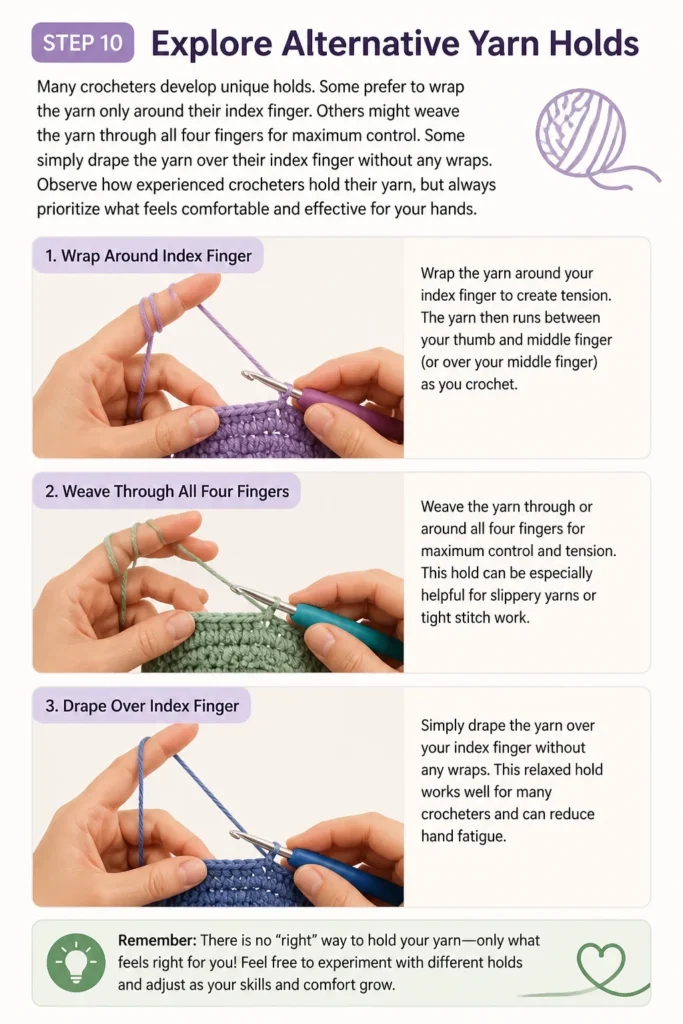
Others might weave the yarn through all four fingers for maximum control. Some simply drape the yarn over their index finger without any wraps.
Observe how experienced crocheters hold their yarn, but always prioritize what feels comfortable and effective for your hands.
Common Mistakes to Avoid
Holding Too Tightly
Gripping the yarn too tightly is a common pitfall for beginners. This can lead to very stiff, hard-to-work stitches that are difficult to insert your hook into.
It also causes hand cramping and fatigue. Relax your grip; the yarn should flow smoothly, not be strangled.
Allow your index finger to do the work of tension control, rather than squeezing the yarn with your entire hand.
Holding Too Loosely
Conversely, holding the yarn too loosely results in floppy, uneven stitches and a fabric that lacks structure. Your stitches might look inconsistent in size.
The yarn needs a gentle, consistent resistance to form well-defined stitches. If your fabric looks gappy, try adding a little more tension.
Ensure your pinky or other fingers are providing enough anchor for the yarn to create that necessary resistance.
Ignoring Hand Position
Your entire hand position matters, not just where the yarn is wrapped. If your wrist is bent at an awkward angle or your fingers are stiff, you’ll feel discomfort.
Keep your wrist relatively straight and your fingers relaxed. Your yarn hand should move fluidly with your hook hand.
A comfortable hand position prevents strain and allows you to crochet for longer periods without pain.
Not Practicing
Tension control is a skill that develops over time with practice. Expecting perfect tension on your first try is unrealistic.
Dedicate time to simply making chain stitches or basic rows, focusing only on the feel of the yarn and the consistency of your tension.
The more you crochet, the more intuitive your yarn hold will become, leading to better results effortlessly.
Troubleshooting
Yarn Slipping Constantly
If your yarn keeps slipping off your fingers or doesn’t provide enough tension, you might need more friction. Try wrapping the yarn around your pinky finger twice instead of once.
Alternatively, experiment with weaving the yarn between your middle and ring fingers before going over your index finger. This adds more contact points and increases control.
Also, consider the yarn type; some fibers like silk or rayon are naturally very slippery and may require a firmer grip or more wraps.
Hand Cramping or Fatigue
Hand cramping is a clear sign that you are holding the yarn or hook too tightly, or that your hand position is strained. Relax your grip immediately.
Take frequent breaks to stretch your fingers and wrists. Make sure your shoulders are relaxed and not hunched.
Re-evaluate your yarn hold; perhaps you’re creating too much resistance, or your fingers are gripping instead of guiding. A looser, more fluid hold is often more comfortable.
Uneven Stitches
Uneven stitches are almost always a symptom of inconsistent tension. Some stitches are too loose, others too tight.
Focus on maintaining a steady flow of yarn from your index finger for each stitch. Don’t rush.
Practice making swatches of basic stitches, consciously thinking about how much yarn you’re pulling through for each loop. Over time, this consistency will become second nature.
Key Takeaways
- Your yarn hand controls tension, which is crucial for consistent stitches.
- Comfort is paramount; adjust your grip to prevent hand fatigue.
- The pinky and index finger are key for anchoring and guiding the yarn.
- Practice is essential for developing consistent yarn tension.
- Don’t grip the yarn too tightly; allow it to flow smoothly.
- Experiment with different holds to find what works best for you and your yarn.
Frequently Asked Questions
Is there one “right” way to hold yarn when crocheting?
No, there isn’t one single “right” way. While there are common techniques, the best hold is the one that feels most comfortable and allows you to maintain consistent tension without pain.
Every crocheter develops a slightly unique grip over time. Focus on the principles of tension and comfort, rather than strict adherence to one method.
How do I know if my tension is correct?
You’ll know your tension is correct when your stitches are uniform in size and your fabric has a consistent, even texture. It shouldn’t be too stiff or too loose.
If your hook is difficult to insert into stitches, your tension is likely too tight. If your fabric is gappy and flimsy, it’s probably too loose. Practice swatches are great for checking tension.
What if my hands get tired quickly?
If your hands get tired quickly, it’s a strong indicator that you’re holding the yarn or hook too tightly, or your posture is poor. Take frequent breaks, stretch your hands and wrists, and ensure your shoulders are relaxed.
Consciously try to relax your grip on both the hook and the yarn. Consider using ergonomic hooks, which can reduce strain.
Does the type of yarn affect how I hold it?
Absolutely. Different yarn fibers and weights behave differently. Slippery yarns like silk or mercerized cotton might require more wraps or a firmer grip to maintain tension.
Sticky yarns like some wools or fuzzy blends might need a lighter touch or fewer wraps to avoid snagging or excessive friction. Always be prepared to adjust your hold for the yarn you’re using.
Our Top Recommended Finds
- Ergonomic Crochet Hooks: These hooks often feature a larger, more comfortable handle, reducing hand fatigue and making long crocheting sessions more enjoyable.
- Yarn Bowl: A yarn bowl keeps your ball of yarn contained and prevents it from rolling away, tangling, or picking up dust as you pull yarn for your project.
- Good Quality Yarn: While any yarn works for practice, a smooth, consistent yarn (like a basic acrylic or cotton) can make learning easier by reducing snags and allowing for clearer stitch definition.
Embrace Your Crocheting Confidence
Mastering your yarn hold is a foundational skill that will transform your crocheting journey. It’s about finding that sweet spot where yarn flows smoothly, tension is consistent, and your hands feel comfortable.
Don’t get discouraged if it doesn’t feel perfect right away. Every stitch you make is practice, building muscle memory and refining your technique.
Grab your favorite hook and a ball of yarn today. Start experimenting with these holds, make a simple chain, and feel the difference. Soon, you’ll be crocheting with newfound confidence and ease, ready to tackle any project that inspires you.
Beginner-friendly templates, step-by-step guides,
and weekly project ideas in your inbox.