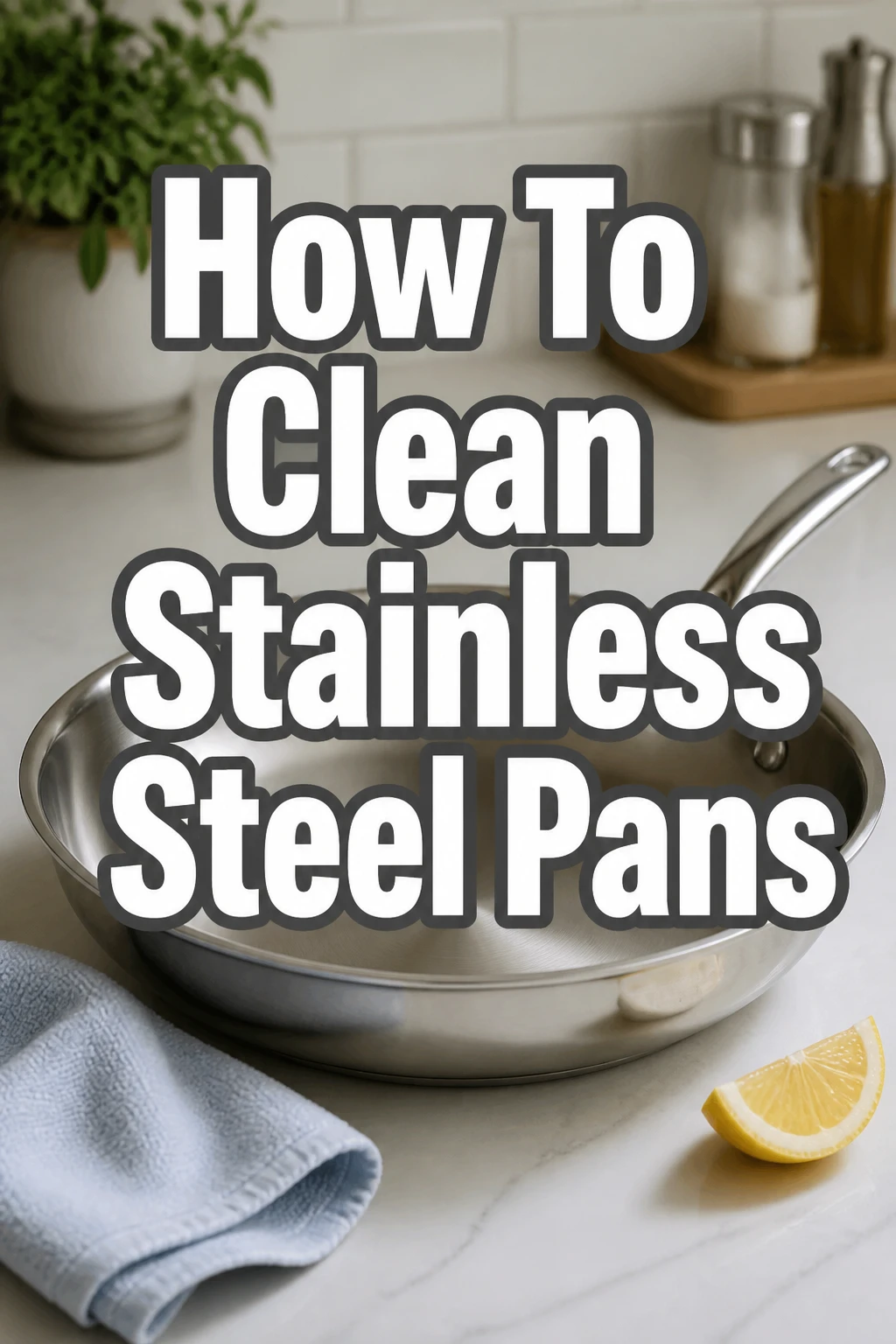
How To Clean Stainless Steel Pans
Beginner-friendly templates, step-by-step guides,
and weekly project ideas in your inbox.
My stainless steel pans are workhorses in the kitchen, enduring everything from delicate sautés to high-heat searing.
I’ve learned the hard way that proper cleaning extends their life and keeps them looking great.
This guide shares the tried-and-true methods I rely on to keep my cookware sparkling.
Quick Overview
This guide will walk you through restoring your stainless steel pans to their gleaming best, tackling everything from everyday grime to stubborn burnt-on messes.
- Time needed: 10-30 minutes (depending on the mess)
- Difficulty: Beginner
- What you’ll need: Dish soap, warm water, sponge, baking soda, white vinegar, Bar Keepers Friend (optional), soft cloth
Step-by-Step Instructions
Step 1: Cool and Scrape
Always allow your stainless steel pan to cool completely before attempting to clean it. Thermal shock can warp the metal, especially if you plunge a hot pan into cold water.
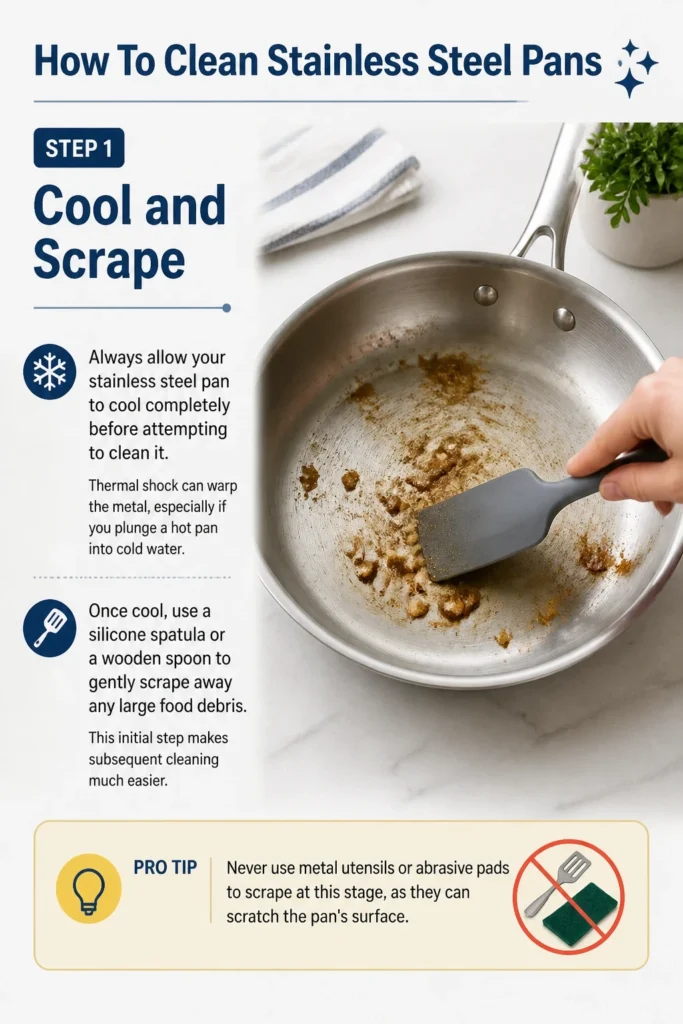
Once cool, use a silicone spatula or a wooden spoon to gently scrape away any large food debris. This initial step makes subsequent cleaning much easier.
Pro Tip: Never use metal utensils or abrasive pads to scrape at this stage, as they can scratch the pan’s surface.
Step 2: Wash with Soap and Water
Fill the cooled pan with warm water and add a few drops of dish soap. Let it sit for 5-10 minutes to help loosen any stuck-on food particles.
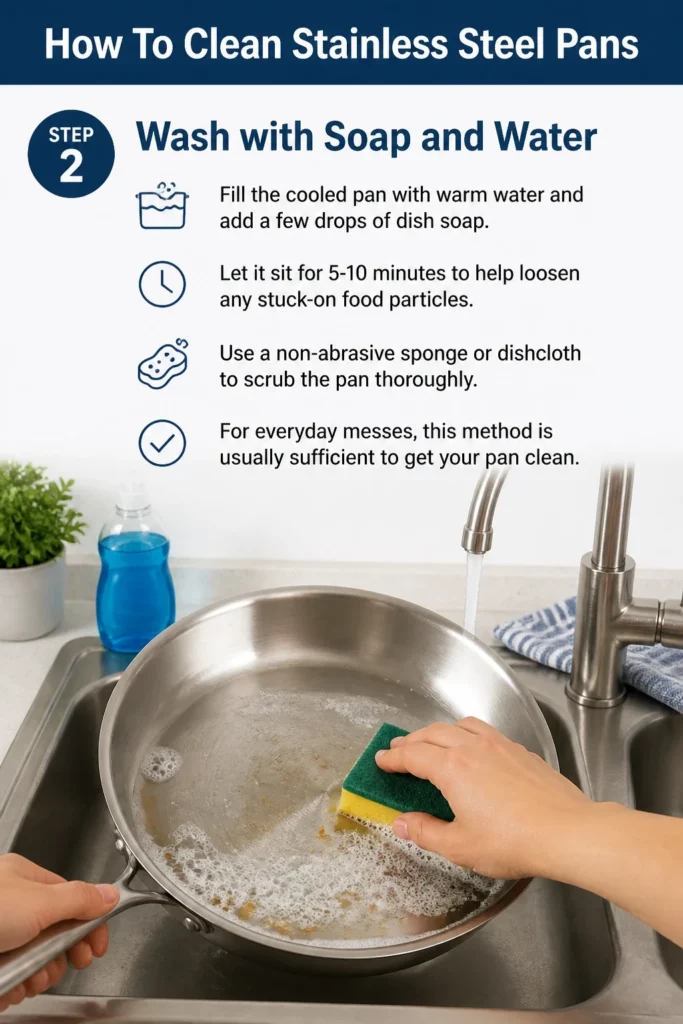
Use a non-abrasive sponge or dishcloth to scrub the pan thoroughly. For everyday messes, this method is usually sufficient to get your pan clean.
Step 3: Tackle Minor Stuck-On Food with Baking Soda
If simple soap and water didn’t remove all the residue, sprinkle a generous amount of baking soda over the bottom of the pan. Add a small amount of warm water to create a paste.
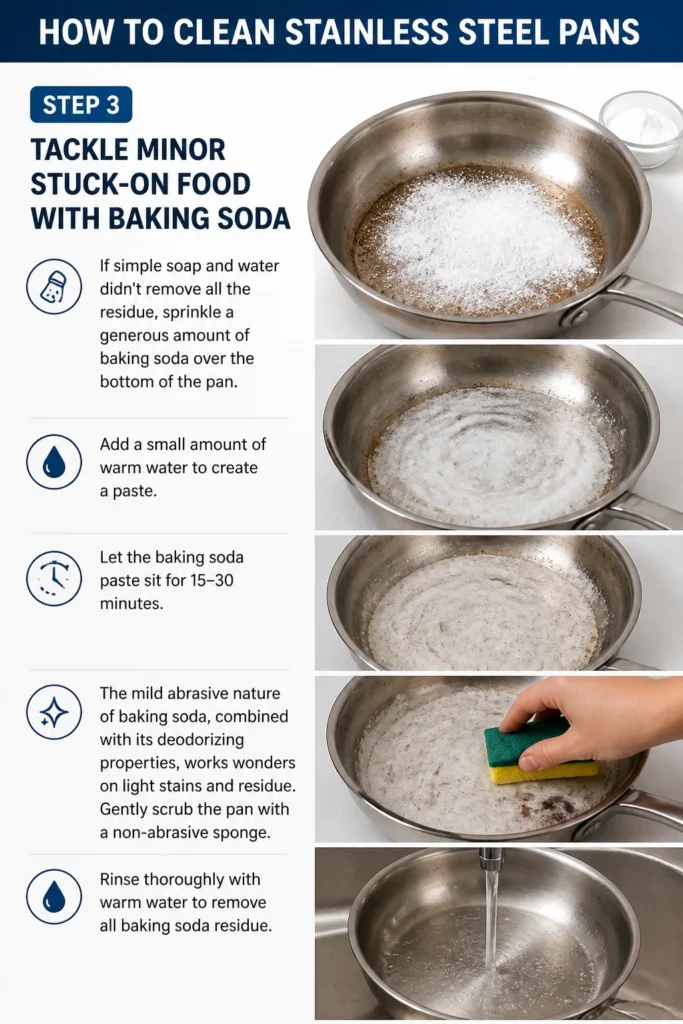
Let the baking soda paste sit for 15-30 minutes. The mild abrasive nature of baking soda, combined with its deodorizing properties, works wonders on light stains and residue.
Gently scrub the pan with a non-abrasive sponge. Rinse thoroughly with warm water to remove all baking soda residue.
Step 4: Use Vinegar for Hard Water Stains or Discoloration
Stainless steel can sometimes develop a bluish or rainbow discoloration, often caused by overheating or hard water minerals. White vinegar is excellent for removing these stains.
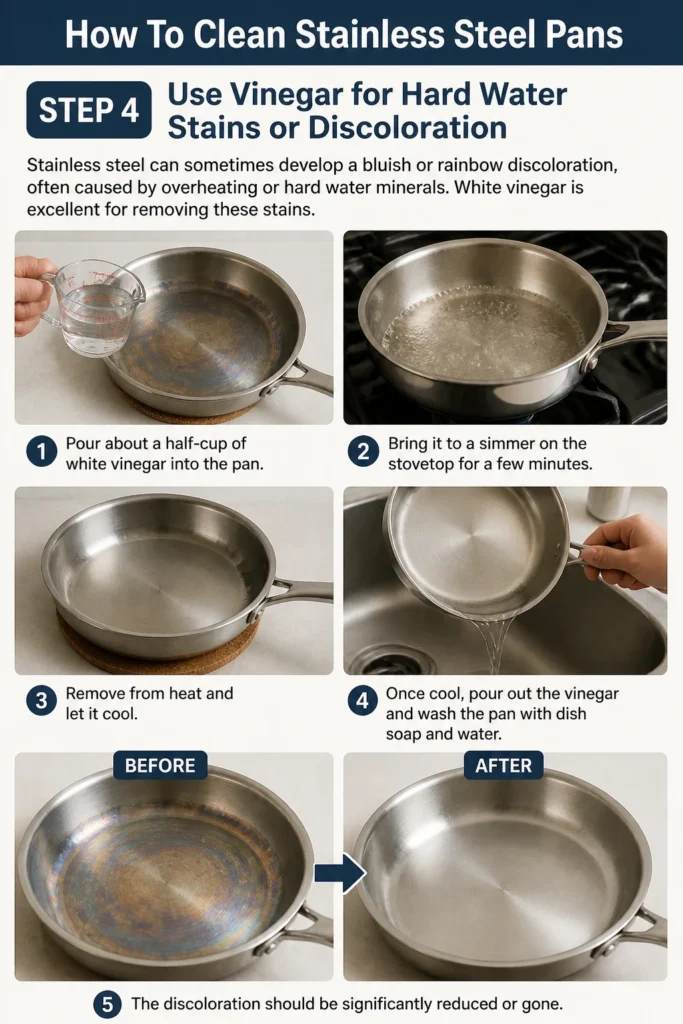
Pour about a half-cup of white vinegar into the pan. Bring it to a simmer on the stovetop for a few minutes, then remove from heat and let it cool.
Once cool, pour out the vinegar and wash the pan with dish soap and water. The discoloration should be significantly reduced or gone.
Step 5: Address Stubborn Burnt-On Food
For more challenging burnt-on food, combine the power of baking soda and vinegar. Sprinkle a good layer of baking soda over the burnt area.
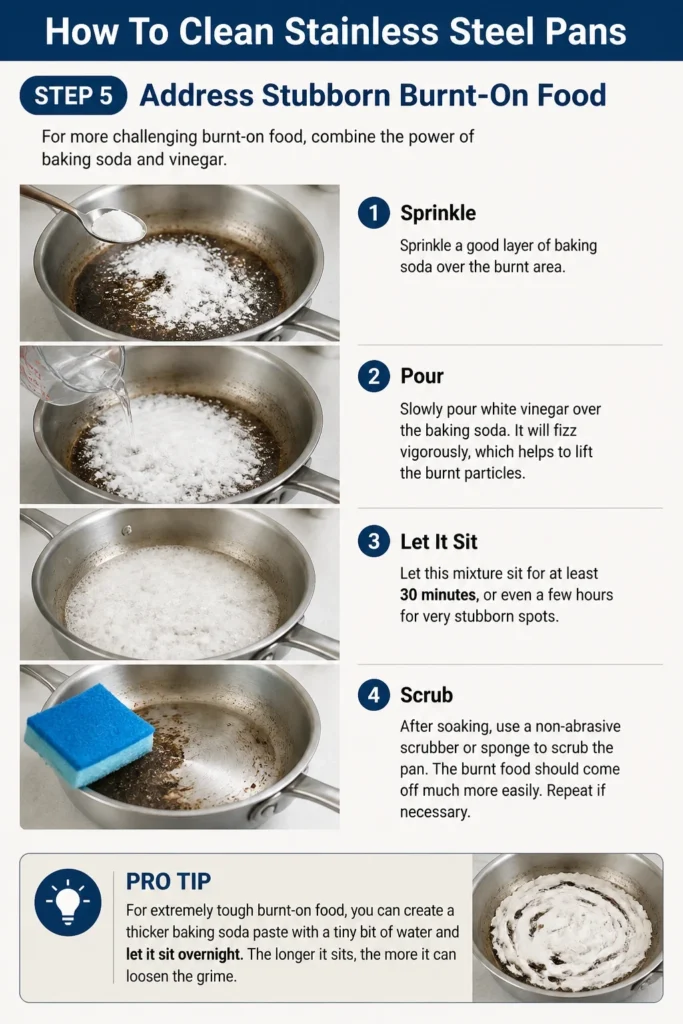
Slowly pour white vinegar over the baking soda. It will fizz vigorously, which helps to lift the burnt particles. Let this mixture sit for at least 30 minutes, or even a few hours for very stubborn spots.
After soaking, use a non-abrasive scrubber or sponge to scrub the pan. The burnt food should come off much more easily. Repeat if necessary.
Pro Tip: For extremely tough burnt-on food, you can create a thicker baking soda paste with a tiny bit of water and let it sit overnight. The longer it sits, the more it can loosen the grime.
Step 6: Employ Bar Keepers Friend for Deep Cleaning and Shine
When you need a deeper clean or want to restore a high shine, Bar Keepers Friend is an excellent choice for stainless steel. It contains oxalic acid, which effectively removes rust, stains, and discoloration without harsh scratching.
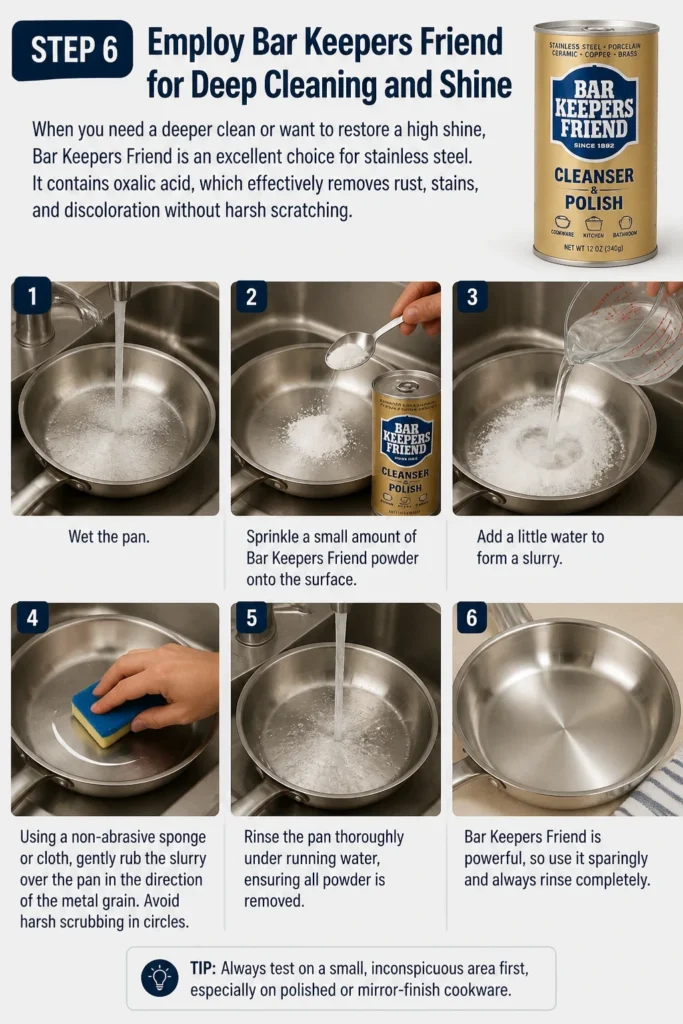
Wet the pan, then sprinkle a small amount of Bar Keepers Friend powder onto the surface. Add a little water to form a slurry.
Using a non-abrasive sponge or cloth, gently rub the slurry over the pan in the direction of the metal grain. Avoid harsh scrubbing in circles.
Rinse the pan thoroughly under running water, ensuring all powder is removed. Bar Keepers Friend is powerful, so use it sparingly and always rinse completely.
Step 7: Remove Heat Tints and Bluing
Heat tints, often appearing as blue or rainbow-colored stains, are common on stainless steel. These are caused by overheating and oxidation.
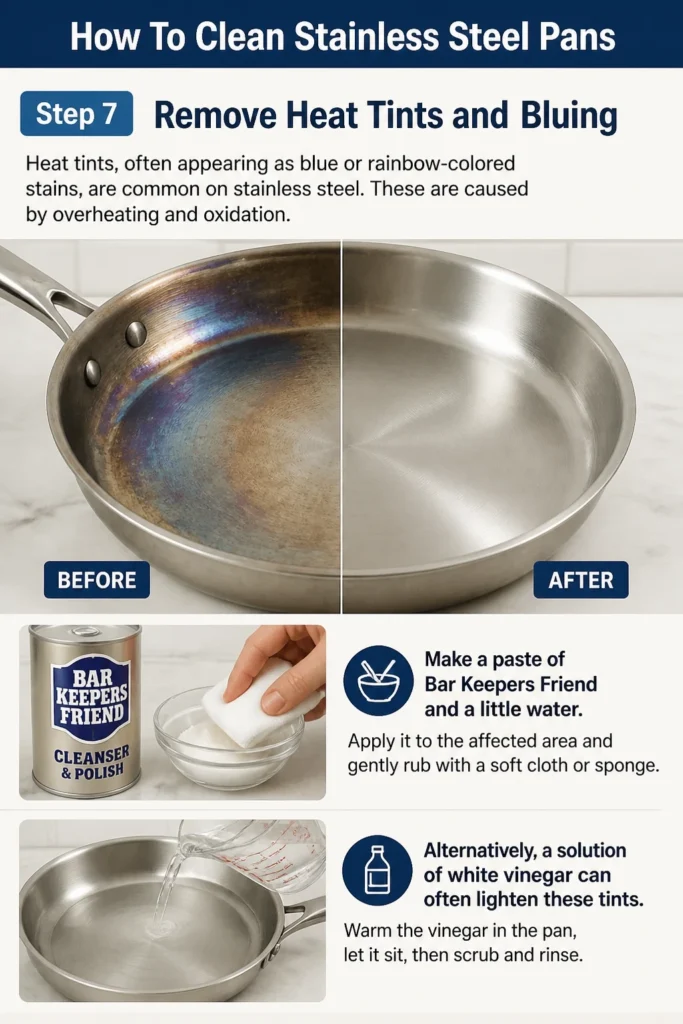
To remove them, make a paste of Bar Keepers Friend and a little water. Apply it to the affected area and gently rub with a soft cloth or sponge.
Alternatively, a solution of white vinegar can often lighten these tints. Warm the vinegar in the pan, let it sit, then scrub and rinse.
Step 8: Dry Immediately and Polish
After cleaning, always dry your stainless steel pan immediately with a clean, soft cloth. Air drying can lead to water spots, especially if you have hard water.
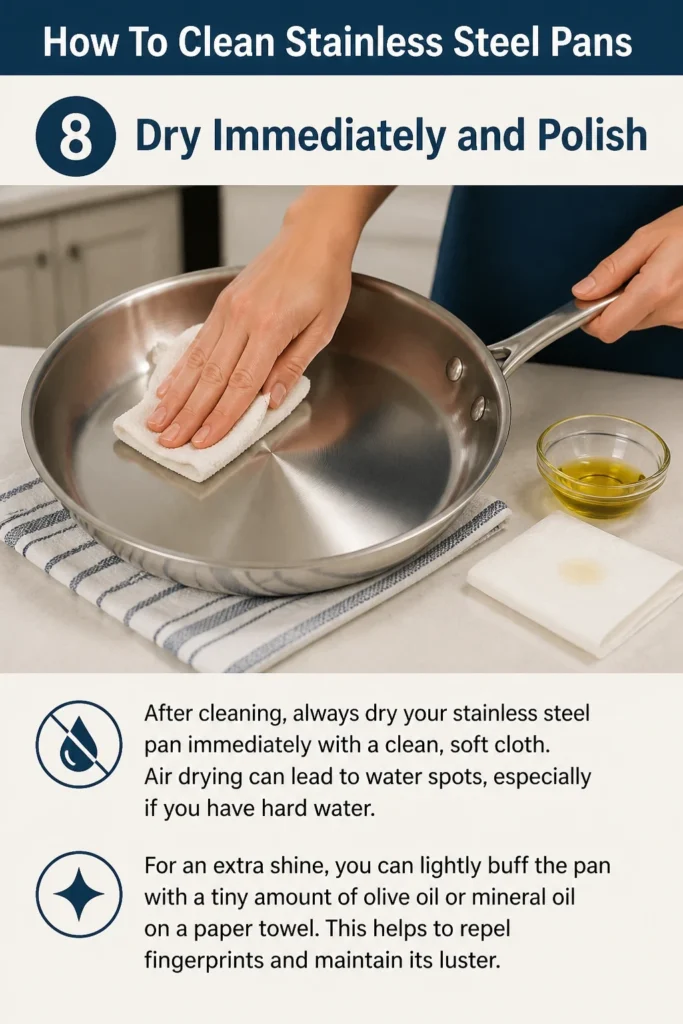
For an extra shine, you can lightly buff the pan with a tiny amount of olive oil or mineral oil on a paper towel. This helps to repel fingerprints and maintain its luster.
Common Mistakes to Avoid
Using Abrasive Scrubbers or Steel Wool
It’s tempting to reach for steel wool or harsh scrubbers when facing a tough mess. However, these can permanently scratch the polished surface of your stainless steel pan.
Scratches not only mar the appearance but also create tiny crevices where food can stick, making future cleaning more difficult. Always opt for non-abrasive sponges, soft cloths, or nylon scrubbers.
Cleaning a Hot Pan
Plunging a hot stainless steel pan into cold water can cause thermal shock. This sudden temperature change can lead to warping, creating an uneven cooking surface.
Always allow your pan to cool down to room temperature before washing. This preserves the pan’s structural integrity and ensures it remains flat on your stovetop.
Leaving Water to Air Dry
Allowing water to air dry on stainless steel often results in unsightly water spots or mineral deposits. This is particularly noticeable if you live in an area with hard water.
To prevent this, always dry your pan immediately after washing with a clean, soft towel. This simple step keeps your pan looking spotless and prevents mineral buildup.
Using Bleach or Harsh Chemical Cleaners
Bleach and other strong chemical cleaners can react negatively with stainless steel, potentially causing pitting or discoloration. These harsh chemicals can damage the protective passive layer on the steel.
Stick to gentler, proven cleaners like dish soap, baking soda, vinegar, or Bar Keepers Friend. These are effective without risking damage to your valuable cookware.
Troubleshooting
Dark Spots or Pitting
Dark spots or small pits can sometimes appear on stainless steel, often due to high salt concentrations being left in the pan for too long, especially when cold.
To address this, try making a paste with Bar Keepers Friend and a small amount of water. Apply it to the spots and gently rub with a soft cloth. Rinse thoroughly afterward.
Sticky Residue After Cleaning
Sometimes, a pan might feel sticky even after washing. This often happens if oil or grease wasn’t fully emulsified and rinsed away.
Rewash the pan with hot, soapy water, ensuring you use plenty of dish soap to break down the grease. A splash of white vinegar in the wash water can also help cut through stubborn oiliness.
Rainbow Stains or Blueish Hues
These iridescent stains are typically heat tints, caused by overheating the pan, which oxidizes the chromium in the stainless steel. They are harmless but can be unsightly.
Pour enough white vinegar into the pan to cover the discoloration. Bring it to a simmer for a few minutes, then let it cool. Scrub with a non-abrasive sponge and rinse. For stubborn tints, Bar Keepers Friend can be very effective.
Key Takeaways
- Always allow stainless steel pans to cool completely before cleaning to prevent warping.
- Start with mild dish soap and warm water for everyday cleaning, then progress to stronger solutions if needed.
- Baking soda is excellent for lifting stuck-on food and gentle abrasion.
- White vinegar effectively removes hard water spots and heat-induced discoloration.
- Bar Keepers Friend is a powerful tool for deep cleaning, removing rust, and restoring shine.
- Never use abrasive scrubbers or harsh chemicals like bleach on stainless steel.
- Dry pans immediately after washing to prevent water spots and maintain their luster.
Frequently Asked Questions
Can I put my stainless steel pan in the dishwasher?
While most stainless steel pans are technically dishwasher safe, handwashing is generally recommended. Dishwashers can be harsh, potentially dulling the finish or leading to water spots, especially with hard water. Handwashing allows for more control and gentle care.
How do I prevent food from sticking to my stainless steel pan?
Proper preheating and oiling are key. Heat the pan over medium heat until a drop of water dances and evaporates quickly. Then, add your oil, let it heat briefly, and only then add your food. This creates a natural non-stick barrier. Avoid overcrowding the pan.
Is it okay to use a metal spatula on stainless steel?
Yes, using metal spatulas on stainless steel is generally fine. Stainless steel is durable and can withstand metal utensils without significant damage, unlike non-stick coatings. However, avoid scraping with excessive force or using sharp, pointed metal tools.
What causes the white spots in my stainless steel pan?
White spots are usually mineral deposits from hard water, especially if water is allowed to air dry in the pan. They can also be caused by starchy foods or certain detergents. A simple solution of white vinegar, either warmed in the pan or rubbed on with a cloth, will typically remove these spots.
Our Top Recommended Finds
- Soft-bristled scrub brush: Perfect for dislodging food without scratching the pan’s surface.
- Microfiber drying towels: Highly absorbent and lint-free, ensuring a streak-free, gleaming finish.
- Bar Keepers Friend Cleanser & Polish: An essential for tackling tough stains, rust, and restoring the original shine.
Reclaim Your Pan’s Radiance Today
Cleaning stainless steel pans doesn’t have to be a chore, even when facing the most stubborn messes. With the right approach and a few simple tools, you can keep your cookware looking pristine.
Embrace these techniques to extend the life of your pans and enjoy the beauty of perfectly clean, gleaming stainless steel for years to come.
Why not pick one of your pans right now and give it the deep clean it deserves?
Beginner-friendly templates, step-by-step guides,
and weekly project ideas in your inbox.